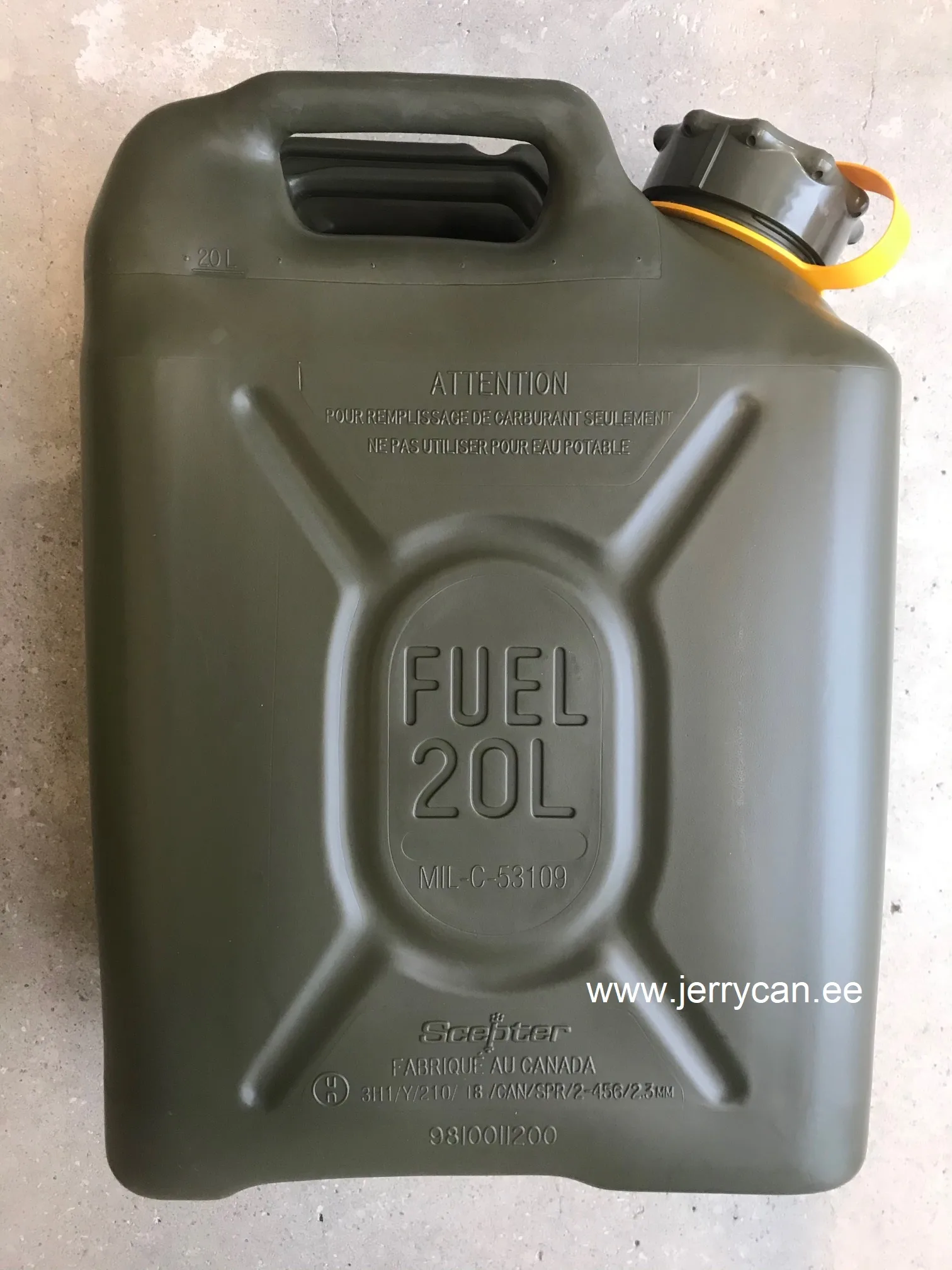
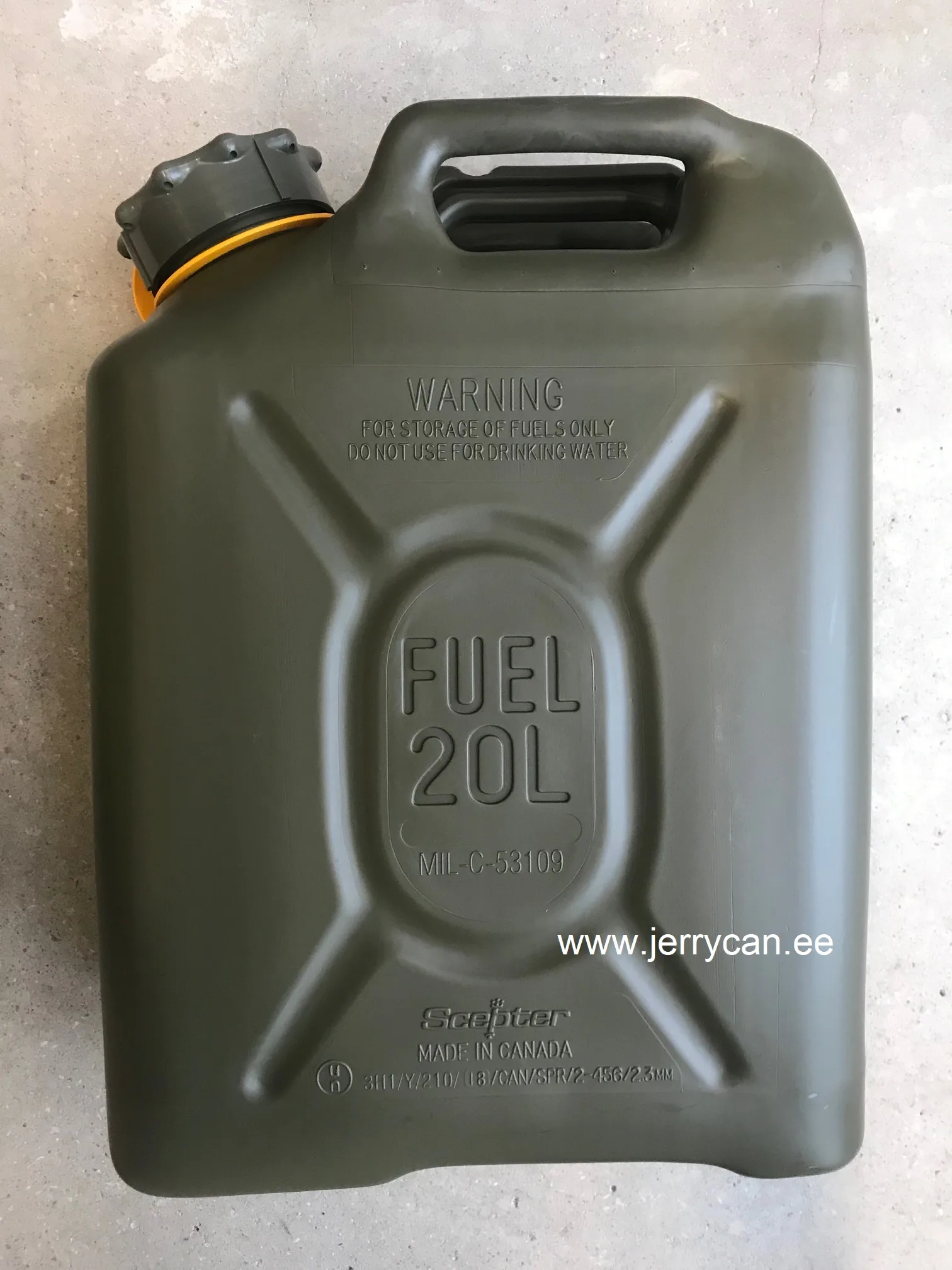
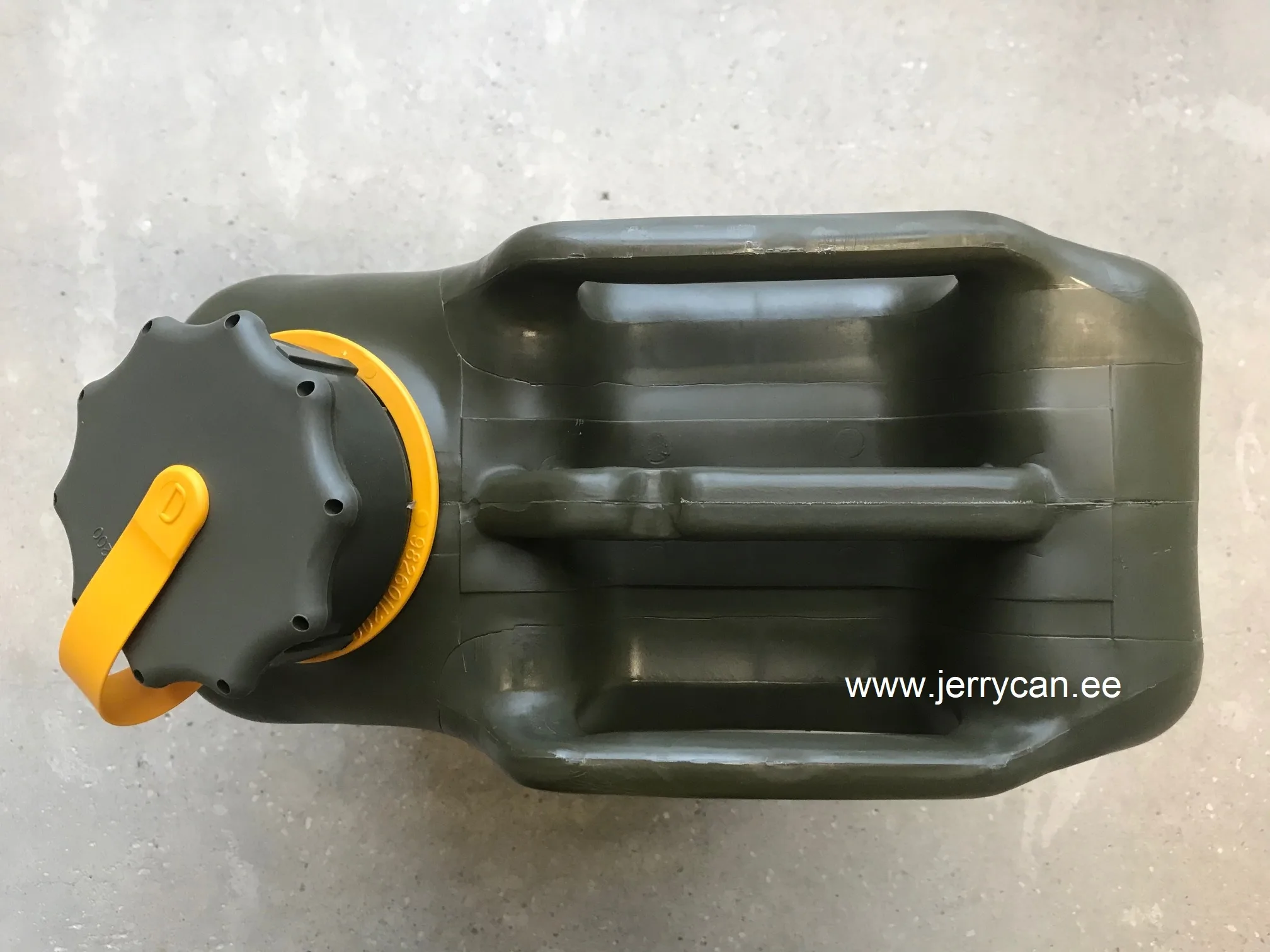
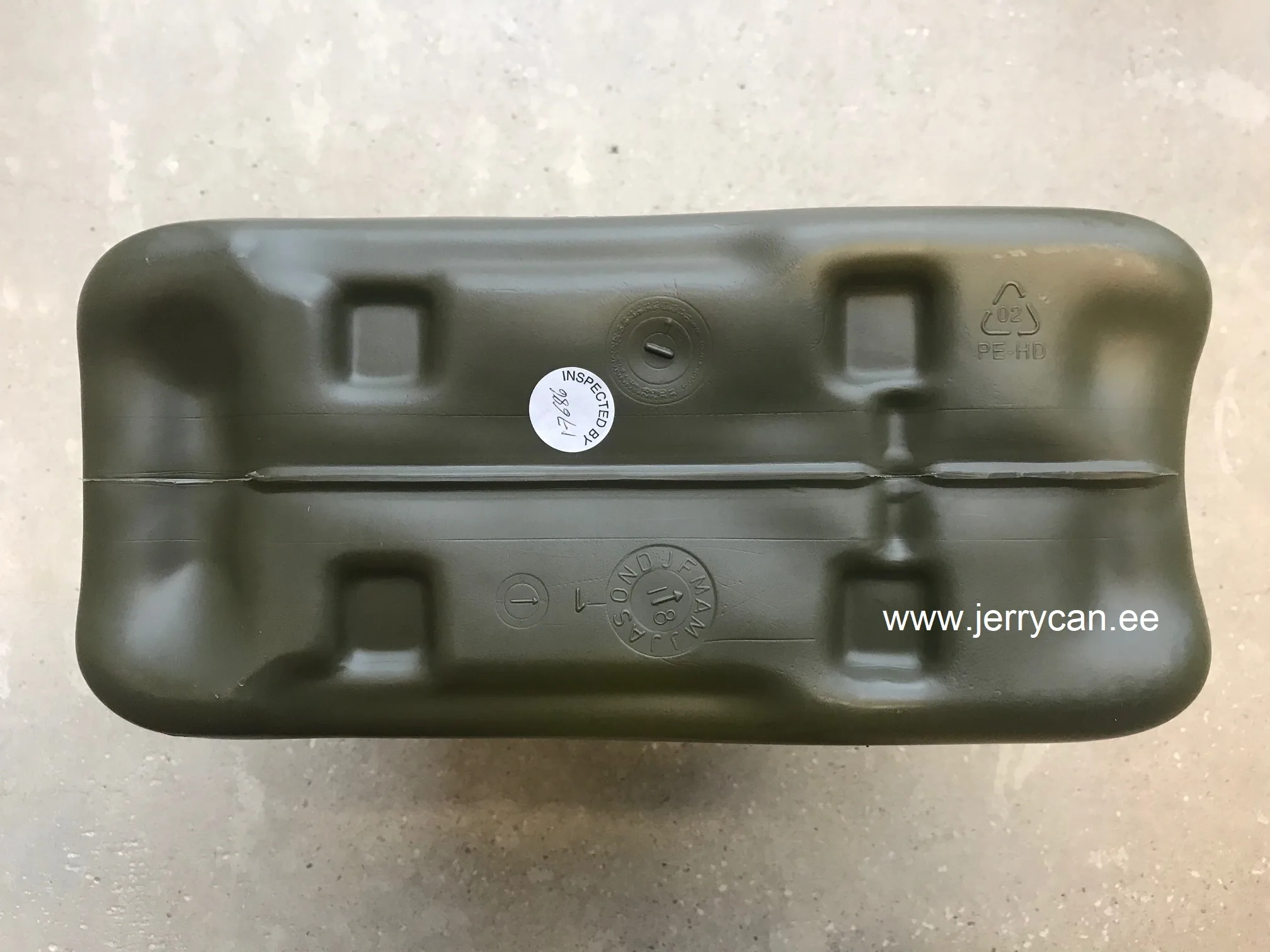
Description
We highly recommend buying together with the canisters a FUEL CAN WRENCH. You will start loving Scepter, but please keep in mind the canister must be always closed super tight to avoid any leaks of gasoline vapors.
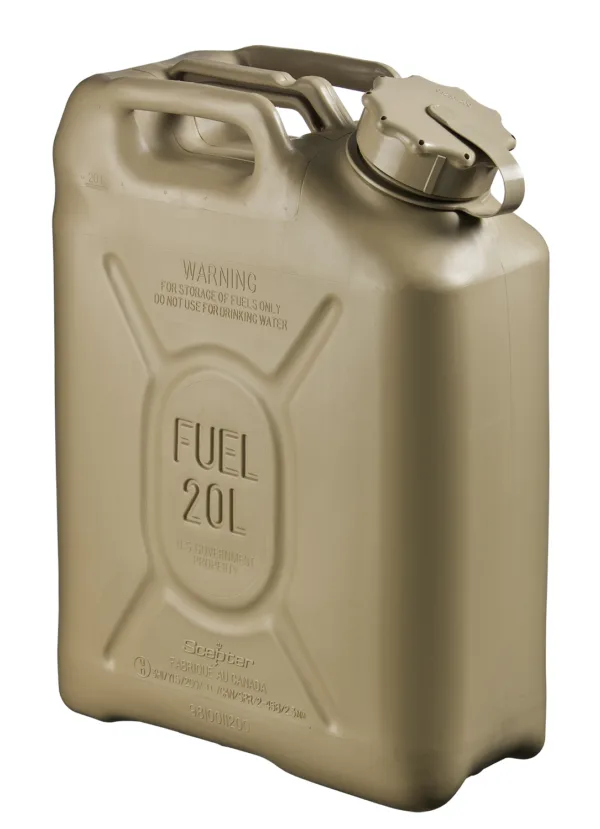
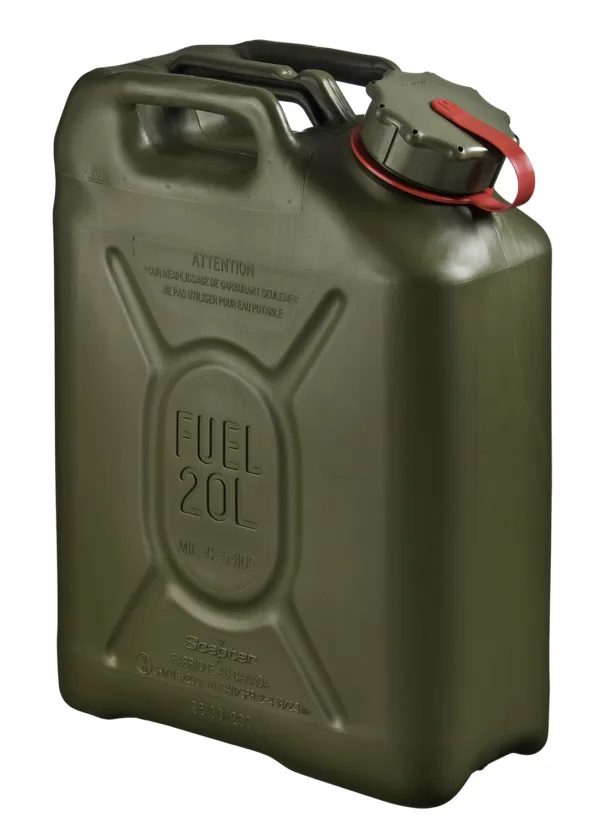
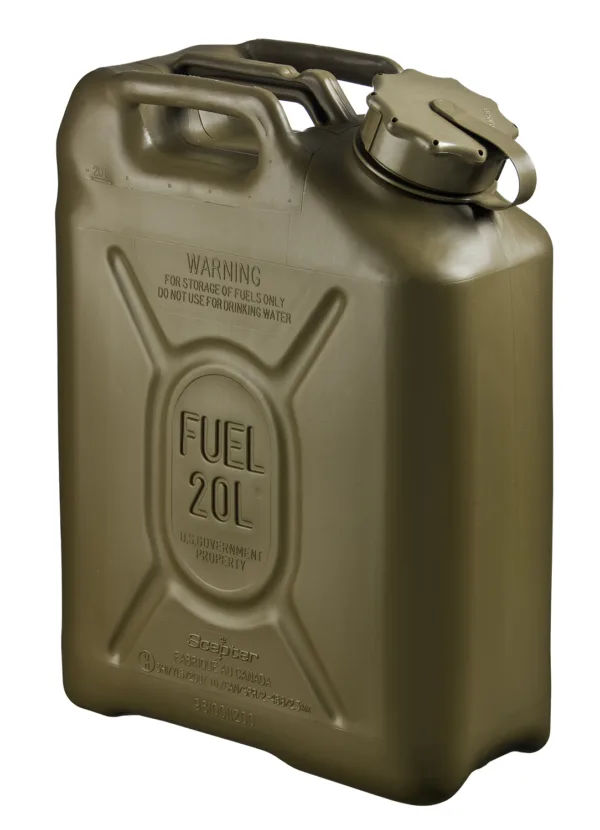
Capacity: 20L / 5Gallons
Height: 46,5 cm / 18,3″
Length: 36,3 cm / 14,3″
Width: 17,5 cm / 6,9″
Weight: 2,59 kg / 5,71 lbs.
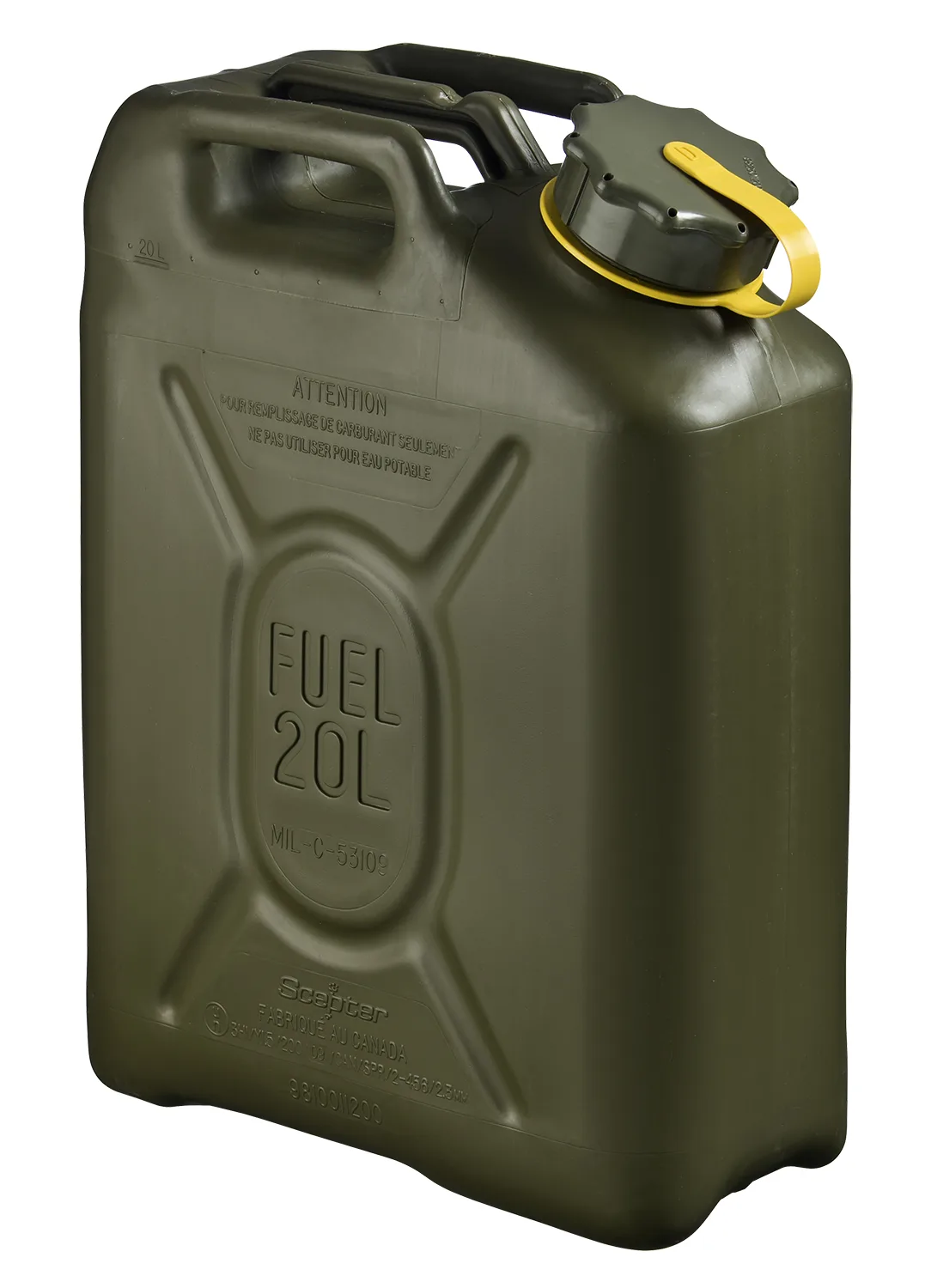
Color: Olive Drab
Strap: Yellow, which notes DIESEL
Gasket: VITON (for Diesel and Petrol)
Producer: Scepter Canada Inc.
Producers homepage: https://www.scepter.com/
Producers code: 05939
The Scepter Military Fuel Canister (MFC) NATO jerry can was developed by Scepter to meet design and performance requirements set by the U.S. Army and Canadian Forces for leak-proof, rugged, safe, dependable and cost-effective plastic jerry can. Scepter has produced and delivered over one million plastic jerry cans.
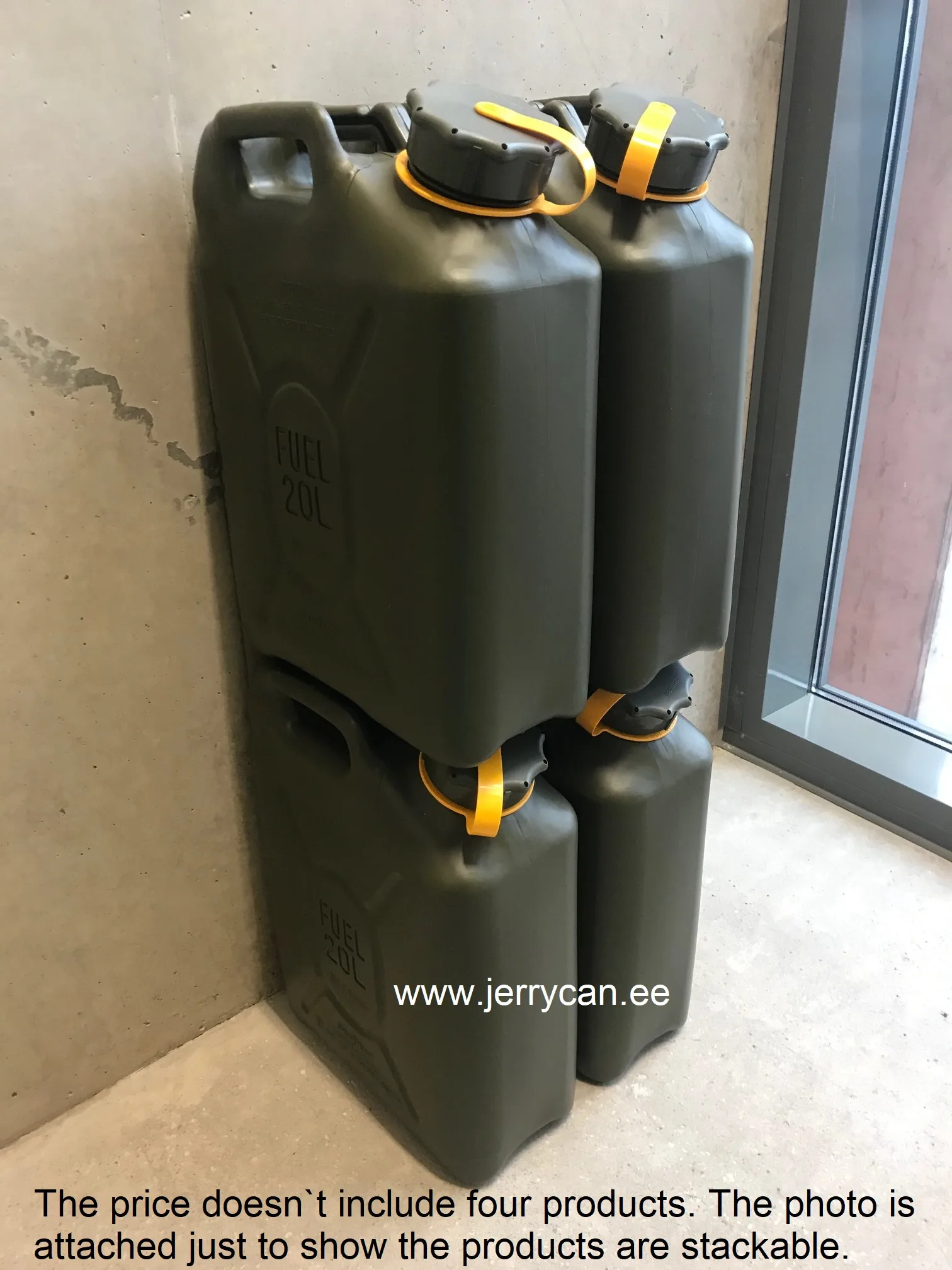
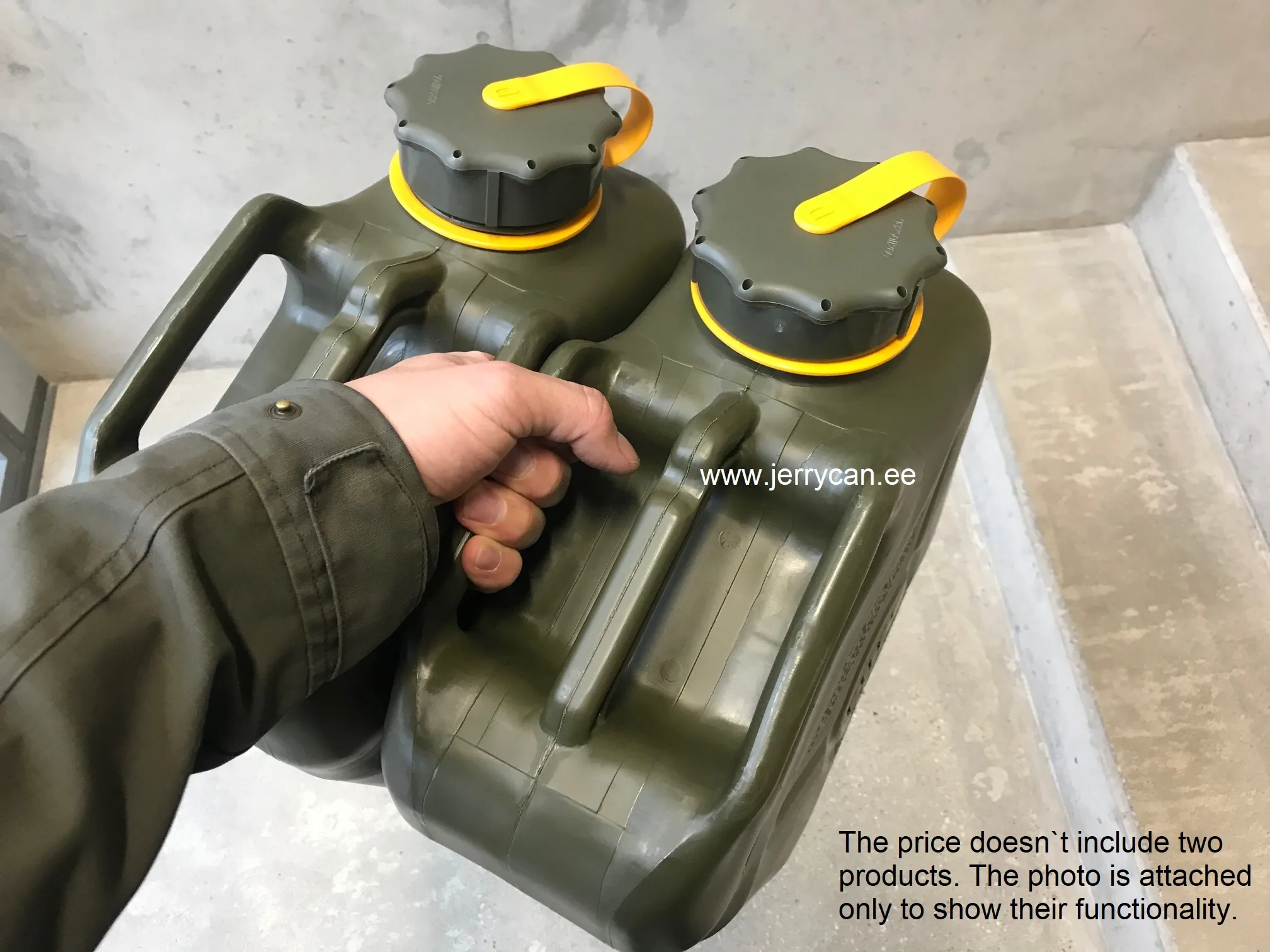
Vehicle and other OEM defense contractors can design equipment with carrying fixtures and brackets that are uniformly designed because of the standardized dimensions of the fuel jerry cans (and the Scepter water jerry cans).
Scepter Plastic NATO jerry can compared to steel jerry cans:
There are several major differences in the construction and performance of steel jerry can compared to plastic jerry can. Here is a quick comparison of the characteristics of steel and plastic jerry cans:
* Steel jerry cans are heavy.
Steel = 4.3kg empty, plastic = 2.59kg empty.
* Steel jerry cans dent.
If the can falls, is thrown, or is struck, its structural integrity will be compromised. Plastic jerry cans will not.
* Overtime, steel jerry cans will rust.
Water vapor will develop in the can and eventually corrode the can from the inside, contaminating and compromising the fuel supply. This rust can be transferred into the fuel tank of a vehicle, clogging the fuel lines and/or engine. If the jerry can is dented, it is more likely to rust faster and at the point of the dent.
* An older steel jerrycan can split along the welds.
Plastic jerry cans do not have any welds as they are moulded in one continuous moulding process.
* In warm climates pressure builds in all fuel jerry cans.
A plastic jerry can will swell, indicating that pressure has built. Such swelling is noticeable and can be released by opening the cap. A steel jerry can will not swell if pressure is building. Mitigation is difficult if unknown. If struck by a tracer bullet, IED fragment, or similar, there will be a spark, flames, and explosion. Scepter’s plastic jerry can will burn by adding fuel/energy to the fire, but it will not result a catastrophic explosion. If the steel fuel jerry can explodes, as a result there will be a significant dispersal of shrapnel. Plastic will not provide shrapnel or such catastrophic outcomes.
* Scepter’s NATO jerry cans can be equipped with a coloured strap
Which indicates the contents of the jerry can – diesel, gasoline, kerosene, waste, or two-stroke fuel (gas/oil mix). This avoids mixing of fuels mistakenly.
Also good to know:
- accepts pour spouts (see MFC Accessories)
- fits standard pattern vehicle brackets for liquid storage containers
- air-vent tube in neck keeps pouring smooth
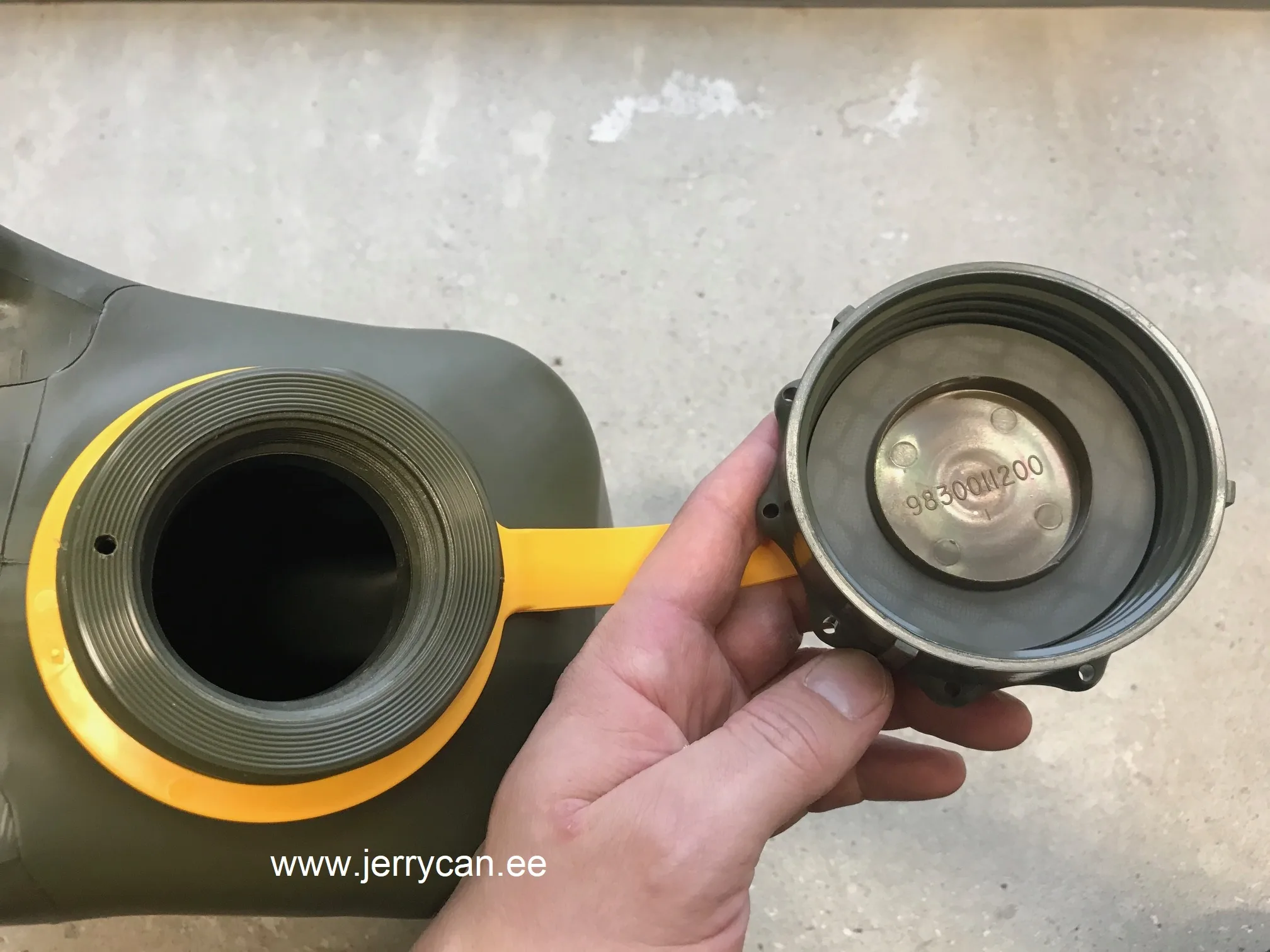
- inside threads accept adapters for stoves and heaters
- has an air chamber at the top, the fuel can will float